

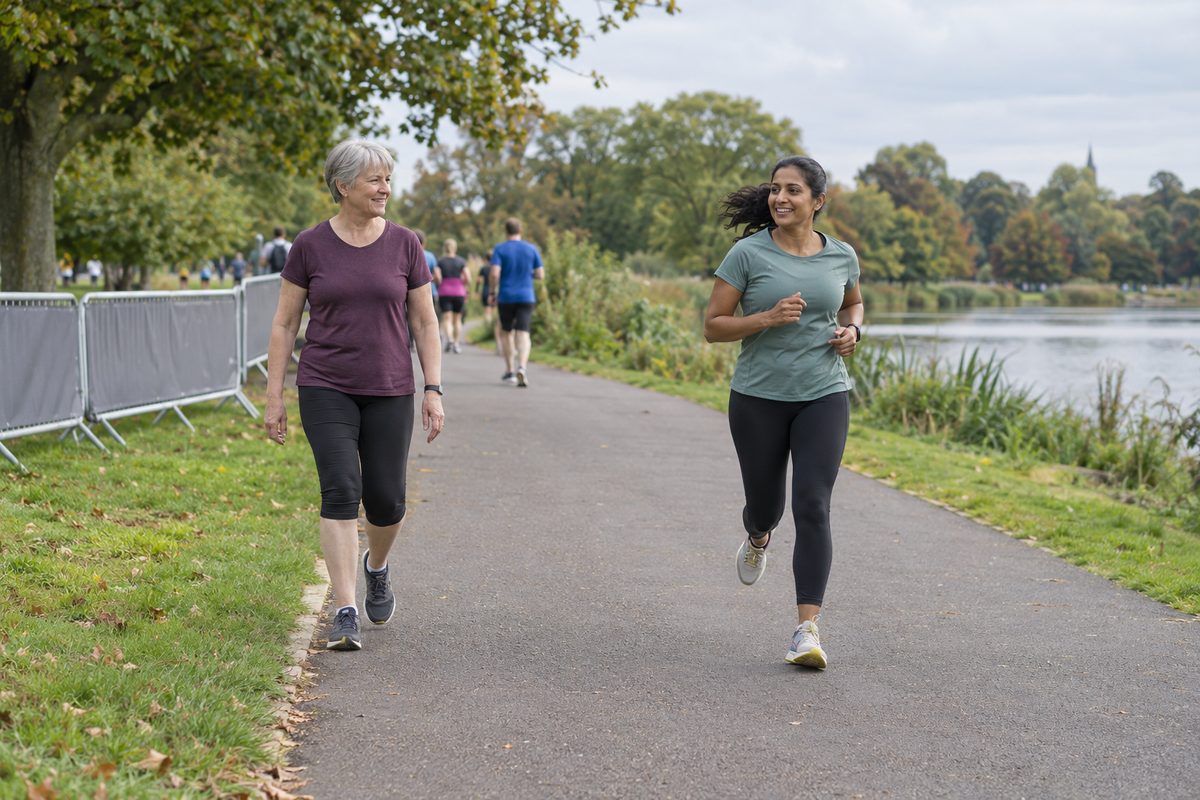
You do not need years of race experience to be considerate. The useful principle is simple: make your movements predictable, leave other people room and follow the people managing the event.
The details differ by race. Read your organiser's rules and listen to the briefing, particularly for shared paths, headphones and start arrangements. What worked at your last event may not apply here.
Start where you are meant to start
Use your assigned pen or wave. Where runners arrange themselves by pace, choose a position that reflects the pace you expect to manage today, including planned walking. Starting appropriately helps the opening stretch work for everyone.
Do not slip into a faster pen to stay beside a friend. Ask the organiser about changes. There is nothing second-class about your allocated start.
Give people room to pass
Hold a reasonably steady line and avoid filling a narrow course with a group running abreast. When overtaking, wait for space and pass with enough clearance. A calm “passing on your right” can help where the path is tight, but it is information, not a command to jump out of your way.
There is no universal “always keep left” rule for every race. Follow course signs and marshal instructions, and be especially aware on out-and-back routes. These general considerations are consistent with the Road Runners Club of America's etiquette guidance, adapted to the event rather than importing US-side conventions.
Walking belongs here too
If your event accommodates your plan, a walking break is simply a change of pace. Check behind and beside you, give a brief signal if helpful, and move gradually into a clear space before slowing. A raised hand does not make it safe to stop suddenly in front of someone.
Use the same awareness before tying a lace, taking a photo or dealing with a pocket. Faster runners have a responsibility to leave passing room too. Nobody needs to apologise for using a permitted run-walk strategy. Our Run-walk guide covers how to organise that approach.
Keep the water station flowing
Look ahead, approach without cutting across someone, take what you need and move beyond the table before stopping. Walking to drink is fine; leave room for others to collect theirs. New York Road Runners' code gives similar guidance about avoiding abrupt stops and congestion.
Put cups, bottles and wrappers in the designated bins or drop zones. If you miss the area, carry rubbish to the next permitted disposal point. Do not throw it over your shoulder or into a hedge. London Marathon Events explains how designated zones help collection and reduce hazards from discarded bottles.
Headphones, toilets and instructions
Check whether your exact headphone type is allowed. Even bone-conduction headphones may be prohibited following an organiser's safety assessment under UK Athletics' road-race rules. If permitted, use them in a way that lets you hear instructions and what is happening around you. Our running-headphones guide explains the different designs.
Use the provided toilets and respect the queue. If you have an urgent access need, speak to event staff about the available arrangements. An accessible facility is there for someone who needs it, including needs you cannot see.
Follow marshals' directions, make room for emergency access and report someone in difficulty. Thanking a volunteer is lovely; following their safety instruction matters more than finding the perfect words while out of breath.
Leave space at the finish
Keep moving through the funnel if you are well enough, then stop for your photo, watch or reunion beyond the busy finishing area. If you feel unwell, ask for help immediately. The London Marathon's finish guidance makes that distinction too.
Take your own allocated refreshments and finisher items, allowing for people still on the course. Keep supporters outside restricted areas.
You might get something slightly wrong. A quick apology and a little adjustment are enough for an ordinary mistake. For a fuller picture of the day, see our first-event walkthrough; for putting your running plan into practice, read pacing your first race.

