
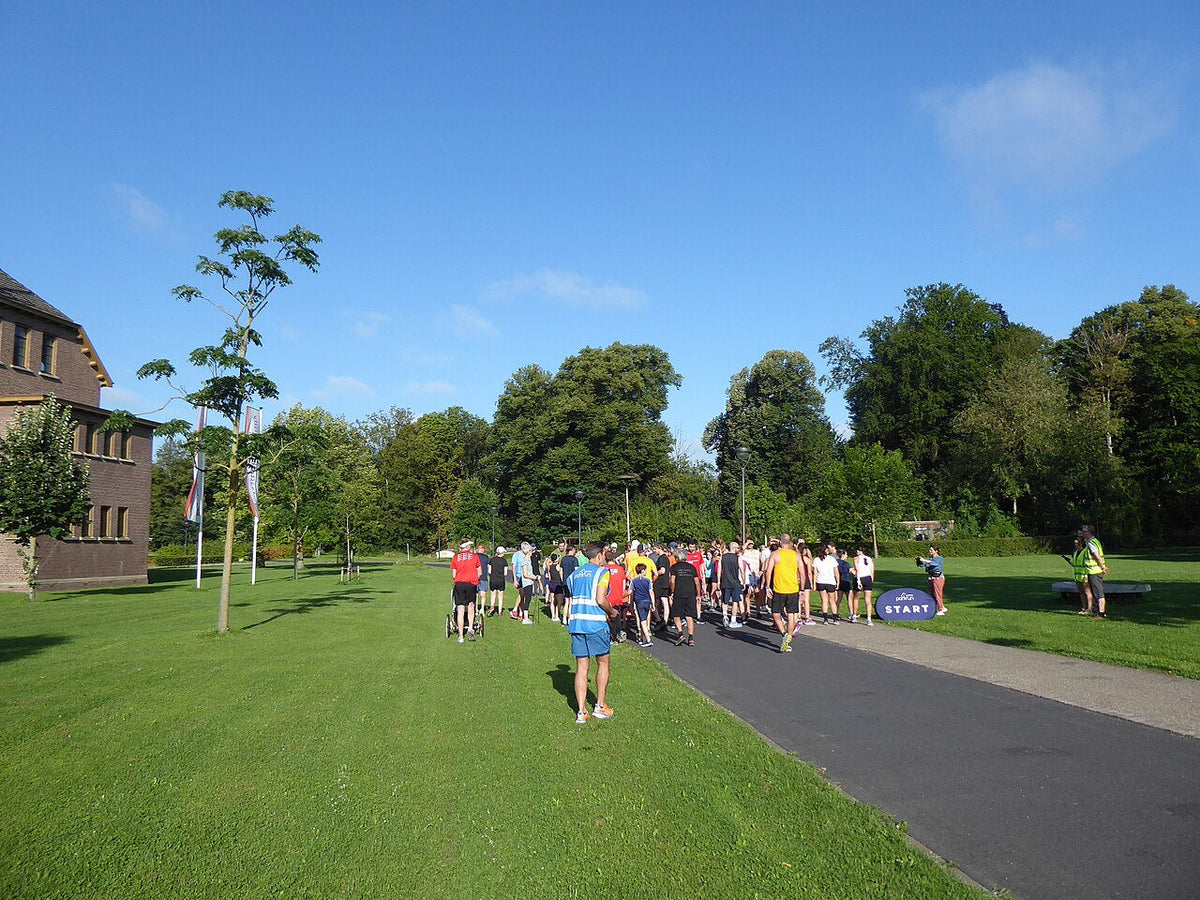
The barcode, the start, the finish token and the slightly awkward standing around beforehand: here is the practical guide to making your first visit feel less mysterious.
The highlights
- parkrun welcomes walkers, joggers, runners and volunteers. You do not need a qualifying time or a running-club membership.
- Register once and bring a scannable personal barcode when you want your participation recorded.
- Check the individual event page before travelling: start times, terrain, accessibility and facilities are local details, not universal promises.
For a first parkrun, the unfamiliar bit can be everything around the five kilometres.
Where do you stand? Will everyone know everyone? What happens at the finish? Is it awkward to arrive alone? And why does everybody seem so concerned about a barcode?
You can want the company and still find the first visit a little daunting. Rather than telling you to “just go”, let’s take the mystery out of it.
This is a guide to the regular 5 km event. Junior parkrun has a different format and its own guidance.
You don’t have to run the whole thing
parkrun describes itself as a free community event where you can walk, jog, run, volunteer or spectate. Walking and running are both part of the regular event.
There’s no need to complete a fast 5 km on your own before coming along. You can walk throughout, or mix walking and running at a pace that suits you.
The Tail Walker role is there at the back of the field; you don’t need to worry about being the last participant to finish. Follow the event briefing and the volunteers’ guidance rather than interpreting the word “run” as an instruction to do something you are not comfortable doing.
You can also visit as a spectator before participating. Familiarity is a perfectly reasonable first goal.
You can walk throughout, or mix walking and running at a pace that suits you.
Check your local event page
A friend’s description is useful, but it may describe a very different course.
Open the page for the event you are actually considering. Look for the start location, start time, route description, travel information and any current notices. Check again close to your visit in case it has been cancelled or moved to an alternative arrangement. parkrun has specific guidance on cancellations.
The word “park” does not tell you whether the course is paved, muddy, hilly, narrow or exposed. Nor does it guarantee toilets, parking, storage or a café.
Make your own small arrival plan. How will you get there? Where exactly is the meeting point? Will you want an extra layer afterwards? Could you travel home easily if you decide not to complete the course?
Sorting out the journey and meeting point beforehand leaves you with less to worry about on the morning.
Register once, then keep your barcode handy
The official registration instructions explain how to create an account and receive your personal barcode. You register once, not afresh for every event. Existing participants should use their existing account rather than accidentally creating another one.
Give yourself time to receive the confirmation and save or print the barcode before the morning you want to attend. It’s much easier to sort out a forgotten password at home than at the start line.
The barcode guidance accepts a scannable barcode on paper or an electronic device. A readable printed backup is worth considering when your phone battery has a habit of disappearing at inconvenient moments.
You can participate without a barcode, but you will not get a recorded result. The barcode rule applies across events, so volunteers cannot simply add a result when you have forgotten yours.4
Arrive with time to ask one question
Try to allow a little extra time for your first visit. You don’t need to be the first person there; you do want enough space to find the start without sprinting towards a briefing you cannot hear.
Look for a volunteer and say that it is your first time. Ask where the first-timers’ welcome happens and where to stand for the main briefing. You don’t need to introduce yourself to an entire crowd.
Here is an entirely ordinary sentence you can use:
“Hello, this is my first visit. I’m planning to walk and run. Where should I head?”
That gives the volunteer the information needed to point you in the right direction.
Listen to the briefing even when you have already read the course page. The information on the day may cover temporary conditions, other park users and local arrangements.
Coming along on your own
You are allowed to arrive alone and keep things low-key.
A nod, a thank-you or a brief conversation can be enough. Plenty of people will recognise each other, which can make arriving alone feel awkward at first. Saying hello to a volunteer gives you a straightforward place to start.
Rather than setting “make friends” as your first-visit target, choose something within your control: find the start, introduce yourself to one volunteer or learn how the finish works.
On a later visit, recognising a face might make saying hello easier. Or you may prefer the simple pleasure of moving alongside other people without much conversation. You can decide how much company you feel like as you go.
Start at your own pace
Before the event begins, think about the outing you intended to have. Perhaps it is a walk, a run-walk or a comfortable continuous run. Try to stick with that plan when the people around you start moving.
Ask a volunteer where walkers and newer participants usually position themselves, leaving room for others and following the local briefing.
During the event, use the course as instructed and be considerate of other people using it. Do not assume every person on the path is part of parkrun or knows which way you intend to go.
To have your participation recorded, the results guidance says you need to start with the event, complete the full set course before the Tail Walker and present your barcode. Starting late or doing only part of the route is not equivalent to a completed event.
What happens at the finish
The finish area looks more complicated than it needs to feel. Volunteers will direct you; follow their instructions rather than trying to memorise a perfect performance beforehand.
Once you have completed the course and crossed the finish, keep moving through the funnel in order. Collect the finish-position token and take it, together with your personal barcode, to the scanning area. Return the position token as directed; it belongs to the event, not your souvenirs drawer.
parkrun’s barcode guidance specifically asks finishers to collect a token even without a barcode, because leaving without one can disrupt the results. You can then return it to a volunteer.
Do not cross the finish again when cheering someone else in. Ask where to wait so you can support them without joining the timing process twice.
Ask when you’re unsure where to go. The volunteers would much rather point you in the right direction than have you worry about getting it wrong.
What about accessibility, buggies and dogs?
Check before you travel rather than assuming that every route accommodates every need.
parkrun’s wheels guidance welcomes wheelchair participation while explaining that terrain and course suitability vary. Ask the local team about the specific surface, gradients, bottlenecks and access you need. Similar practical checks matter for buggies; dogs also have separate rules and event-specific restrictions.
You should not have to guess from a scenic photograph whether an event will work for you. Contacting the organisers is a sensible part of choosing a first visit.
Afterwards, let it be enough
Results are normally available on the day, although volunteer teams sometimes need longer to process them.5 While you wait, think about whether you enjoyed the morning and would like to go back.
Ask yourself a different set of questions. Was the route suitable? Did the timing fit your weekend? Would you like to return, try a different event or ask about volunteering?
Volunteering is another way to participate, not a consolation option for someone who is not currently running.1 Contact the local team to ask about roles and any access needs rather than assuming every job requires running experience.
By the time you head home, you’ll know where to meet, how the course feels and what to do with that finish token. That’s a good start for a second visit.
Love RW x
More from Running Woman
Read our guide to finding the right running group or understanding your own pace.
Sources and further reading
- parkrun: official introduction and event finder: the participation offer.
- parkrun Support: event cancellations: check before travelling.
- parkrun Support: registration: one registration and a personal barcode.
- parkrun Support: barcodes: electronic and printed barcodes, results and tokens.
- parkrun Support: results: completion requirements and result processing.
- parkrun Support: wheels: course-specific access considerations.
- parkrun Resources Hub: volunteer roles: the Tail Walker supports the back of the field.


