
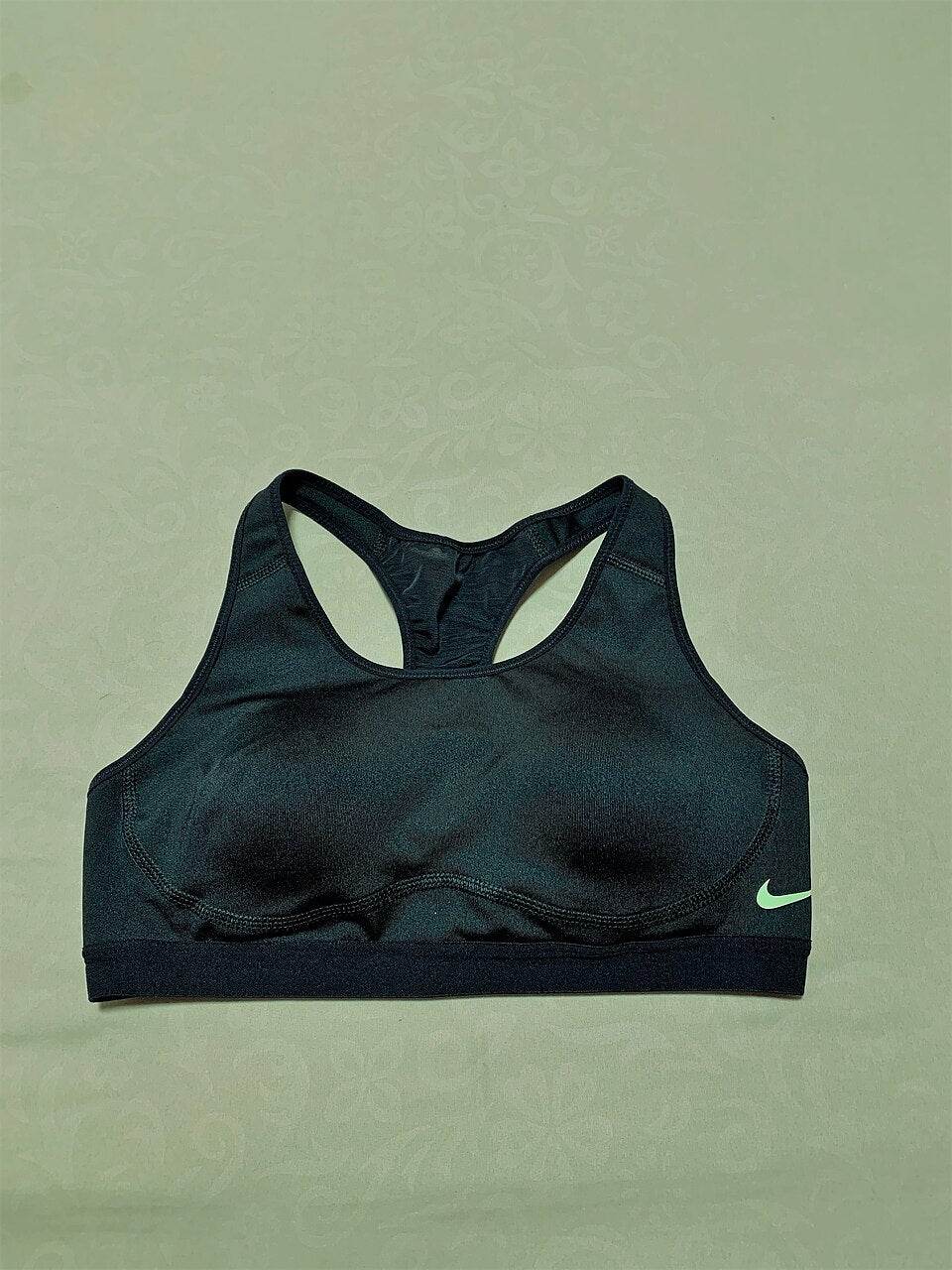
Digging straps, a wandering underband and the changing-room wrestling match: none of them needs to be accepted as the price of going for a run. Let’s make finding support a little less mysterious.
The highlights
- Start with how a bra fits and feels, rather than assuming the size on your everyday bra is the whole answer.
- Check the underband, cups, straps and any wires, then consider how comfortable and practical the garment is for you.
- Persistent breast pain or new breast changes need healthcare advice, not simply another shopping basket.
A sports bra that rubs, digs in or needs adjusting every few minutes can spoil a run. It’s frustrating to spend money on one, follow the size guide and still feel uncomfortable.
Yet choosing one can feel unnecessarily complicated. There are different shapes, support descriptions, fastening systems and sizes, followed by the special challenge of getting back out of it in a small changing room.
Taking time over fit is worthwhile whether you’re starting a walk-run programme or training for a marathon. Begin with the parts that feel wrong in the bra you already own, then use those details to guide your search.
This is a guide to asking better questions and checking fit. It is not a product ranking, a diagnosis or a promise that one style suits every body.
Begin with the problem you actually want to solve
Before browsing, finish this sentence: “I want a bra that lets me run without…”
Perhaps it is rubbing under your arms. Perhaps you keep adjusting the band. Perhaps the fastening is difficult to reach, or you cannot comfortably get the garment over your head. Be specific about where the problem is and when you notice it.
Take that short description with you when you shop or speak to a fitter. It is more helpful than trying to remember which bra a stranger recommended in the comments beneath a video.
You can also separate your requirements into essentials and preferences. Comfortable support and being able to put it on independently may be essentials. A particular colour may be a preference. Keep comfort first when you compare the options, however much you like the print.
The number on the label is a starting point
There is research behind taking fit seriously. In a 2010 study of 104 women, researchers compared self-selected and measured sizes with professional fitting criteria. They found ill-fitting bras in 85% of that study sample. That is not a current estimate for all women, and it does not mean you have done something wrong; the study points to the value of learning how fit is assessed rather than relying only on a size label.
Treat a fitting appointment as a chance to learn. Ask the fitter to explain what they are checking and why they suggest a different size or style. Ask enough questions to feel confident checking the fit again at home.
Treat the size on the label as a starting point. Concentrate on how the bra sits, supports you and feels when you move.
A practical fit check
The University of Portsmouth’s breast-health guidance describes fit checks for the main components. Use them as a starting point, and ask a knowledgeable fitter when you are unsure.
| Area | What to look for |
|---|---|
| Underband | Level around your body, secure without being painfully tight, and not sliding as you move. |
| Cups | Breast tissue contained without obvious spilling or empty gaps. |
| Straps | No digging or painful pressure. They should not be doing the underband’s job. |
| Centre front | In a structured, separated-cup design, check how it sits against your chest with a fitter. Do not expect every compression design to look the same. |
| Underwire, when present | Following the crease beneath the breast rather than sitting on breast tissue. |
Those checks are more useful than simply pulling the straps tighter and hoping for the best.
If a bra feels wrong, describe where. “This hurts across my shoulders” is a better starting point for help than “Maybe I just need to get used to it.”
A fitting should help you understand what to look for next time.
Understand the shape without getting lost in the terminology
Portsmouth’s guide distinguishes compression bras, which hold the breasts towards the chest; encapsulation bras, which support each breast separately; and combination designs that use both approaches.
Knowing the terms gives you language for a conversation. It does not mean you need to arrive with a technical verdict on the construction that will suit you.
Ask to compare alternatives, particularly when something about your current bra is not working. Explain what running involves for you and what you find comfortable. A fitter can then discuss the actual options in front of you, rather than guessing from a cup size alone.
Keep an open mind about the appearance, too. The bra that looks familiar may not be the one you prefer wearing, and the one that looks impressive on a website may not feel right at all.
Try moving in it before you buy
A glance in the mirror is only one part of choosing something you intend to move in.
Try to make a small, repeatable checking routine. Adjust the garment properly, move your arms, turn your torso and notice your breathing and comfort. Ask the shop whether you can make a few gentle running movements in an appropriate space. It won’t reproduce a full run, but it gives you more to go on than standing still.
Pay attention to whether you immediately want to tug, loosen or reposition something. Pause rather than explaining away the discomfort because the colour is lovely or the label says it is designed for running.
Then consider the less glamorous part: can you take it off again without assistance or pain? Check that the fastening is manageable for you, especially when reaching behind your back is difficult.
For online shopping, read the fitting, hygiene and returns conditions before removing tags or exercising in the garment. Do not assume an item remains returnable after a sweaty test run; the relevant retailer’s terms need checking.
Make a fitting conversation work for you
You can set boundaries during a fitting. Ask what the appointment involves, explain how much assistance you are comfortable with and say when you would prefer privacy.
A useful conversation might cover three things: where your existing bra falls short, what you need to do in the new one, and your budget. Bring the questions that matter to you, whether they concern fastening access, support, coverage or a particular area of discomfort.
Our suggested wording is: “Could you explain what you would change about this fit, and show me how I can check it myself?”
The aim is to leave knowing what to look for next time.
Ask about any fitting fee beforehand, and take time afterwards to consider the options. Booking a fitting doesn’t oblige you to buy the first bra you try.
Reassess the bra you own before buying three more
Start with the garment in your drawer. Does it still meet the fit checks? Is there a fastening problem? Are you repeatedly choosing something else because this one is uncomfortable?
Look at its condition and performance rather than replacing it just because you’ve owned it for a certain length of time.
For care, follow the instructions on the particular garment. For replacement, consider its condition and whether it still does the job you need. When you are unsure whether the problem is fit, construction or wear, that is another useful question for a fitter.
A bra that used to fit well may no longer suit you. Apply the same checks you would use for a new one, and ask for help when you’re unsure what needs changing.
Know when the answer is not another bra
Breast pain has different possible causes. The NHS advises seeing a GP when it is not improving. Do not assume persistent discomfort must be caused by running or that finding a different garment is the only answer.
Ask for an urgent GP appointment or use NHS 111 for concerning changes such as a red, hot or swollen breast, pain with fever or shivering, a hard fixed lump, nipple discharge, changes in breast shape or skin, or a new nipple rash or inversion. The NHS page explains these warning signs and where to seek help.
A sports-bra fitting is useful for a clothing problem. It is not a substitute for checking a breast-health concern.
Leave room for the enjoyable bit
Once you have narrowed down comfortable options, you are allowed to care about colour, style and how you feel wearing them. Practical does not have to mean joyless.
Start with one bra that meets your needs rather than ordering several before you know how they fit. Keep the care instructions and note the size and style that worked. That way, next time you need one, you’ll have somewhere useful to start.
Love RW x
General information only. This article does not assess an individual bra fit or diagnose breast pain. Seek appropriate fitting support and healthcare advice when needed.
More from Running Woman
Read starting running again or running through perimenopause.
Sources and further reading
- University of Portsmouth: Sports-bra fit and support: guidance by breast-health researcher Nichola Renwick, published in 2023. Sports-bra construction and fitting guidance.
- McGhee and Steele: Optimising breast support through correct bra fit: 2010 cross-sectional study; the sample finding is not presented as current population prevalence. The publicly available abstract was consulted.
- NHS: Breast pain: when persistent pain or breast changes need medical advice.

.jpg)